
Planning bathroom lighting around everyday tasks
Begin with what you need to see: the basin, shower, storage and route through the room. Technical suitability needs a qualified assessment.
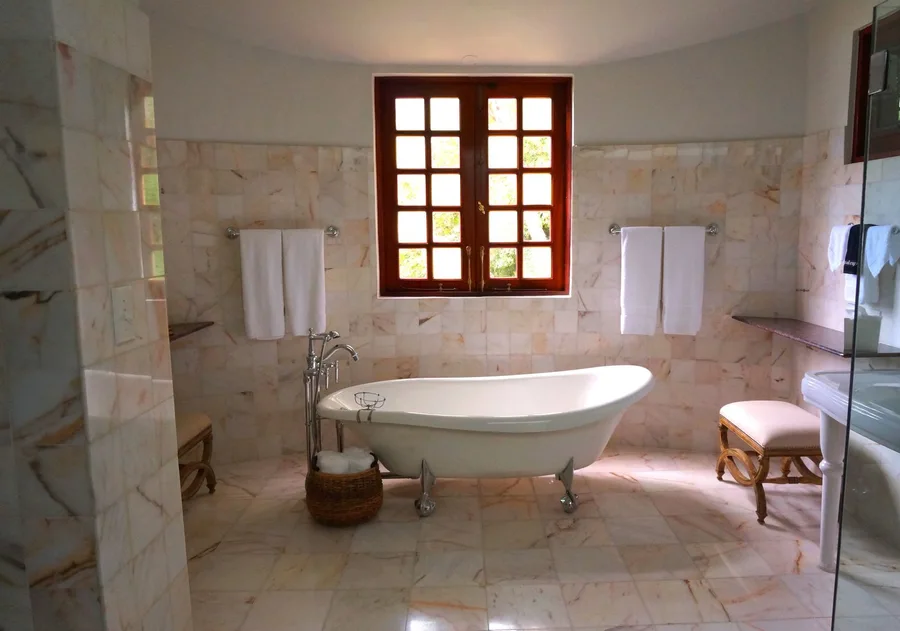
Bathroom planning guide · Reviewed 28 September 2026 · Illustrative photography
Describe the tasks
Think about shaving, applying make-up, cleaning and finding items in storage. The room can look bright in a photograph while leaving the mirror or a cupboard difficult to use. Explain where current shadows or glare bother you.
Look at lighting and finishes together
Pale, dark, glossy and textured surfaces change how the room feels under light. Compare finish samples where possible and avoid choosing every element in isolation. Consider the light available during the morning and evening, not only at midday.
A decorative feature can support the atmosphere, but it should not displace the light needed for practical use. Decide which tasks matter most before adding extra features.
Leave technical choices to the right assessment
Bathroom electrical work has location and safety requirements. Ask a suitably qualified professional to assess the proposed fittings, positions and controls. Do not choose suitability from appearance or a general online example alone.
Discuss the electrical scope alongside ventilation and any illuminated mirror or heated furniture. This is a planning conversation, not a DIY wiring guide.
Make operation straightforward
Think about how the lights are controlled when entering and leaving, and whether different uses need different settings. Keep the daily operation understandable for everyone who uses the room. Agree the selected products and responsibilities in the fitting specification.
Bring it into your own room
Include lighting needs in the conversation about your bathroom, before choosing fittings. Explore the fitting options or send your enquiry.
Related reading: Finding useful storage in a small en-suite.